
Water Storage
Keeping Water on the Landscape. Protecting Communities Downstream.
Interested in Water Storage Practices?
Across the Cannon River Watershed, heavy rainfall and major floods have shown us the damage too much water can cause. Water storage practices can help slow the movement of water through the landscape, reduce peak flows, improve water quality, and provide valuable wildlife habitat.
Fill out the contact form below and let's start the conversation!
When Water Moves Too Fast
Heavy rainfall can send large amounts of water across the landscape in a short amount of time. When water moves quickly through ditches, streams, and rivers, it can contribute to flooding and damage homes, roads, bridges, agricultural land, and other infrastructure.
Flooding is a natural part of the water cycle, but the way water moves through the landscape can influence the severity of downstream impacts. Finding opportunities to slow, spread, and temporarily store water can help reduce the amount of water reaching downstream areas all at once.

Finding Solutions to Flooding
The Cannon River Watershed Joint Powers Organization has conducted a Long-Term Flood Risk Reduction Feasibility Study for the Upper Cannon River Watershed. The study is an activity that has been identified within the Cannon River Comprehensive Watershed Management Plan. The study includes hydrologic and hydraulic modeling for the Upper Cannon River Watershed to better understand watershed dynamics. Additionally, the study utilizes modeling to develop a wide range of flood risk reduction alternatives that offer potential solutions to reduce the risk and impact of flooding issues in communities within the Cannon River Watershed. Water storage practices are recognized as some of the alternatives within the Flood Risk Reduction Study that can be implemented to help protect our communities downstream as well as improving water quality and providing habitat.
Slow It Down. Spread It Out. Store It.
One way to help reduce the impacts of high water is to temporarily store water upstream and release it gradually.
Water storage practices can hold water on the landscape during periods of heavy rainfall. Instead of allowing water to quickly move downstream, these practices give water a place to collect and slow down before it continues through the watershed.
By keeping water on the landscape longer, we can help reduce peak flows and the amount of water moving downstream at one time.
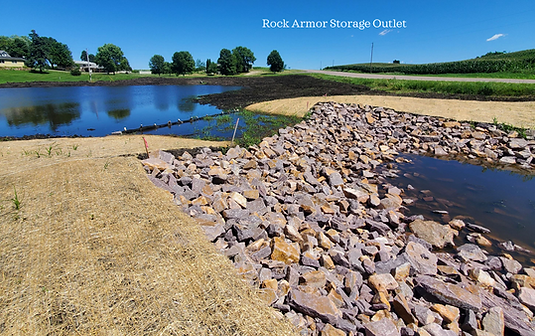


Water Storage Options
Water storage can take many forms. Depending on the landscape and site conditions, projects may restore or enhance areas that naturally hold water or create new opportunities to temporarily store runoff.
Stormwater Retention Basins
Constructed or modified wet ponded basins or pretreatment forebays, or constructed wetland treatment systems designed to provide runoff rate/quantity and water quality control. This includes wet ponds, stormwater ponds, ponded pretreatment forebays, constructed wetland systems, stormwater or modified wetlands, or expansion of storage capacity to wet ponds, pretreatment forebays, or constructed wetland systems.
Drainage Water Management
The process of managing water discharges from surface or subsurface agricultural drainage systems with water-control structures. This practice applies to areas where drainage is needed during certain periods and where it is advantageous to limit the outflow at other times. This includes dikes, water & sediment control basins, and water control structures.
Multipurpose Drainage Management
Multipurpose drainage management practices target critical pollution source areas to reduce erosion and sedimentation, peak flows and flooding, and improve water quality, while protecting drainage system efficiency and reducing maintenance for priority Chapter 103E drainage systems. These practices must be adjacent to 103E drainage systems. This includes grade stabilization structures, grassed waterways, water & sediment control basins, open tile inlet replacement, constructed wetlands or wetland restorations, water control structures, and saturated buffers.
Impoundments
Controlled structures or basins that can be sited, designed, and operated to temporarily store large volumes of runoff coincident, reduce peak flows, and trap sediment and nutrients. This includes dams, berms, embankments, and water control structures. They may incorporate engineered outlets, spillways, risers, or other features that regulate water levels and control the timing and rate of water release.
Floodplain Storage Restoration
Floodplains can be restored to increase the area adjacent to a river or stream that can hold water during an event. This practice also decreases sediment, pollutants, and nutrient transport, and increase infiltration for groundwater recharge. This includes tile breaks and establishing native vegetation to stabilize soils and improve floodplain function.
Wetland Restoration
Wetland restoration can be accomplished by restoring drained or altered wetlands, reconnecting wetlands to their natural water sources, and reestablishing native wetland plants. Projects may include breaking drainage tile, blocking or filling drainage ditches, installing water control structures, or constructing low embankments to restore natural water levels.


The best approach depends on the characteristics of each site. Local conservation professionals can help landowners explore options that may be appropriate for their property.

More than Flood Protection
Keeping water on the landscape can do more than reduce flooding. Water storage projects can provide benefits for people, water resources, and wildlife throughout the watershed.
-
Reduce Peak Flows: temporarily storing water and releasing it gradually can help reduce the peak amount of water moving downstream.
-
Protect Downstream Communities: slowing and storing water upstream can help reduce the impacts of high flows on homes, roads, bridges, agricultural land, and other infrastructure downstream.
-
Improve Water Quality: water storage areas can slow runoff and provide opportunities for sediment and nutrients to settle out before water continues downstream.
-
Provide Wildlife Habitat: wetlands and other areas with permanent vegetation can provide important habitat for waterfowl, amphibians, pollinators, and other wildlife.
-
Add Beauty to the Landscape: water storage projects can create attractive natural areas that add diversity, seasonal interest, and beauty to the landscape.

Could Water Storage
Work on Your Land?

Every property is different, and the right water storage solution depends on the landscape, soils, drainage patterns, existing wetlands, and other site conditions.
Water storage may be an option for properties where:
-
Water naturally collects or concentrates.
-
Heavy rainfall creates runoff or flooding concerns.
-
Wet or poorly drained areas limit how the land can be used.
-
There is an opportunity to restore or enhance a wetland.
-
A conservation project could temporarily hold water before it moves downstream.
If you have an area on your property where water tends to collect or move quickly, there may be an opportunity to keep more water on the landscape.
Talk with your local Soil and Water Conservation District or fill out the form above to learn more about water storage options for your property.